SaaS Is Not Dead. But AI Is Changing What Good SaaS Looks Like
SaaS is not dead, but AI is changing what good SaaS looks like. The future is open, modular, AI-connected software that adapts around the workflow.
Subscribe to my newsletter to see content first:
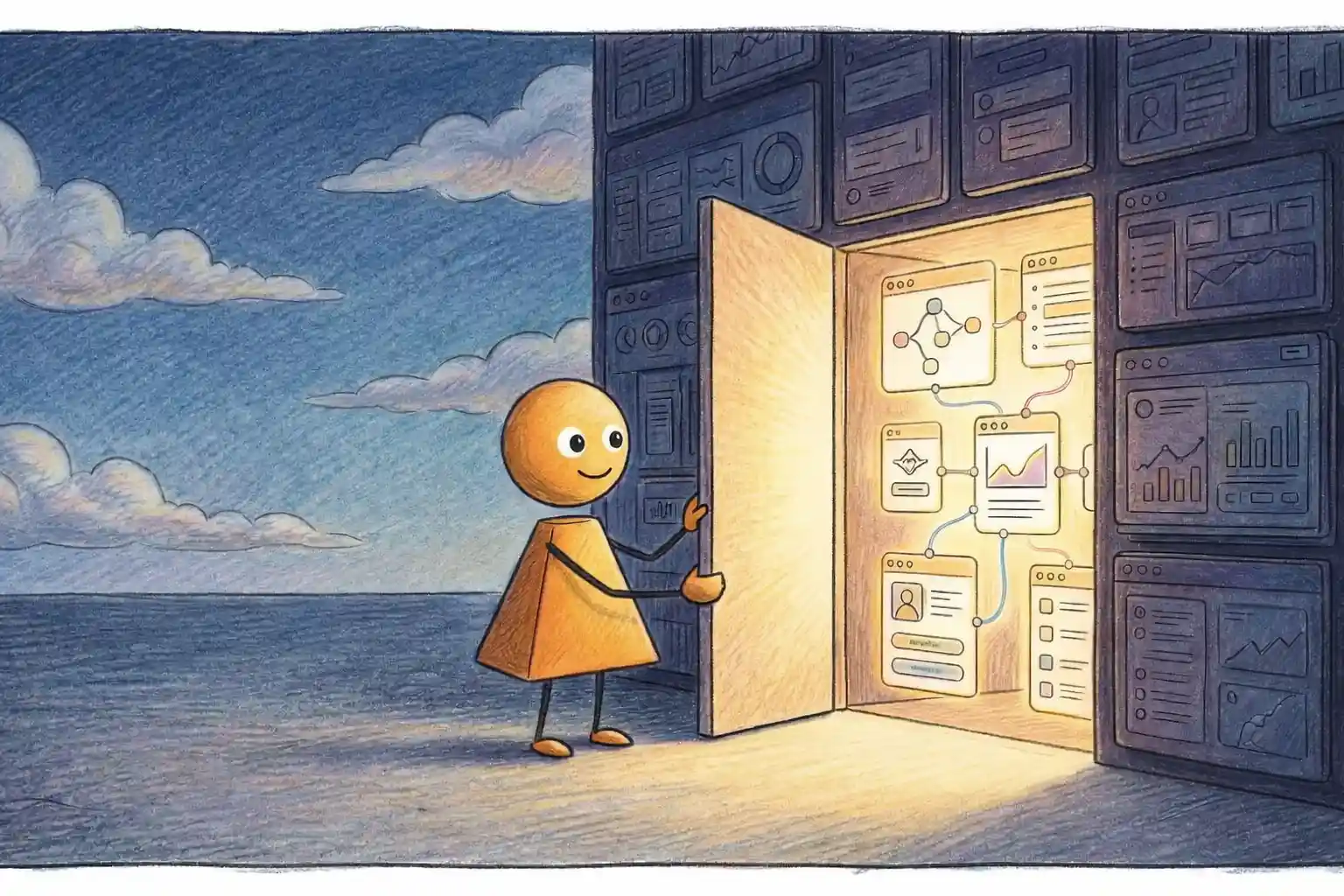
I am having this conversation at almost every event right now. AI has made it much easier to build software. That part is obvious. The leap many people then make is less convincing: that this means SaaS is dead.
I do not buy that.
AI has changed the economics of building software. It has not changed the reality of owning and maintaining it. And for most businesses, that is the part that matters most.
Building software is getting easier. Owning it is not.
The problem with a lot of the “end of SaaS” conversation is that it confuses creation with ownership.
Yes, more companies will build their own tools. Yes, more workflows will be assembled rather than bought. And yes, some SaaS products should be nervous.
But building something useful is only the start.
Once a business depends on a tool, the real work begins: fixes, edge cases, permissions, reporting, integrations, API changes, model changes and all the small changes that come with real-world use.
That is where the simple story starts to break down.
A tool that looked quick and efficient to build can become a recurring drain on time and attention. What felt like a productivity win at the start slowly becomes a productivity killer. It is no longer a technical issue. It is an operational one.
The hidden cost of internal software
One reason SaaS looks vulnerable right now is that its costs are visible. There is a licence fee. It sits on a budget line. It gets questioned. The cost of internal software is usually much less visible.
It is spread across founder time, ops time, maintenance, debugging, workarounds and the constant interruptions that come from owning something yourself. It rarely appears in one place, which makes it easy to underestimate.
That does not mean internal tools are a bad idea. In some cases, they will absolutely make sense, especially where a workflow is genuinely differentiating or where existing software is bloated and poorly matched to the business.
But there is a big difference between we can build this and we should own this indefinitely. That is the part many teams are about to learn (again, as we did this at least once already in the early 2000s).
The real shift is not the end of SaaS. It is the end of rigid SaaS
I do not think SaaS is going away. I do think it is going to change.
For years, the SaaS model has largely meant fixed platforms and fixed interfaces. You buy the tool, adopt the workflow and fit your process around the software as best you can. That model made sense in a world where software was harder to build, harder to adapt and harder to integrate.
AI changes some of those assumptions.
The next generation of SaaS will be judged less on feature breadth alone and more on two increasingly important factors:
- First, how easily it connects to external AI tooling.
- Second, how easily it supports custom interfaces around the task at hand.
That is a significant shift. The question is no longer just: how many features does this platform have?
It now questions: how well does this platform work with the models, agents, workflows and systems I want to use? And how easily can it adapt the experience to the user, role or moment?
That is a very different standard.
Openness and adaptability are becoming strategic.
I have just been through this myself when selecting a CMS, and it directly affected the platform choice. Historically, you might choose a platform based on content features, usability, ecosystem, templates and price.
Those things still matter. But now you also have to think about how well it connects to external AI tooling, how flexible it is in terms of workflow design and whether it allows the kind of interface and orchestration changes that are likely to matter much more over the next few years.
That changes the buying decision. And it will not just affect CMS platforms. It will affect a large part of the software market.
Closed systems become less attractive when the world around them is becoming more dynamic. Rigid interfaces become less attractive when users increasingly expect tools to adapt around their needs rather than force everyone through the same experience.
The platforms that win are likely to be more open, more modular and more interoperable.
AI will reshape the layer on top of core systems
I do not think most businesses want to become software companies just because AI has lowered the barrier to building software. What is more likely is this:
Core systems will remain important. But the layer on top of them will change.
Instead of relying entirely on a fixed interface provided by the SaaS vendor, companies will increasingly expect to connect external AI tooling, orchestrate workflows across systems and create lighter-weight interfaces tailored to the user and the task.
That could mean AI-generated workflows. It could mean role-specific interfaces. It could mean agents sitting across multiple systems. It could mean custom operational layers that turn a rigid platform into something much more adaptable.
In other words, the future is probably not no SaaS. It is SaaS with far more flexibility around it.
SaaS is not dead. But the old model is under pressure
So no, SaaS is not dead. But closed, rigid SaaS should be worried. The winners will be the platforms that are easiest to connect, easiest to adapt and easiest to reshape around the workflow in front of the user. That is where the market is heading.
And it is a very different model from the SaaS many companies are still selling today.
About Riaz

I've spent over 20 years building and scaling B2B products, services and marketing technology - from early-stage startups through to exits, and now as CEO of Radiate B2B - the B2B ad platform.
Along the way I've led teams, launched products, built and sold companies, and spoken around the world about data, AI and the future of marketing and work.
Today I split my time between working directly with companies as a consultant and fractional operator, mentoring founders and leaders, and speaking to audiences who need someone to translate what's happening in technology into decisions they can act on.
Read the full storyRecommended posts

Strawberry picking robots, winning users and societal challenges.
This week returns to strawberry picking robots, overcoming inertia to win users and the challenges of user generated content for children and wider.
Read more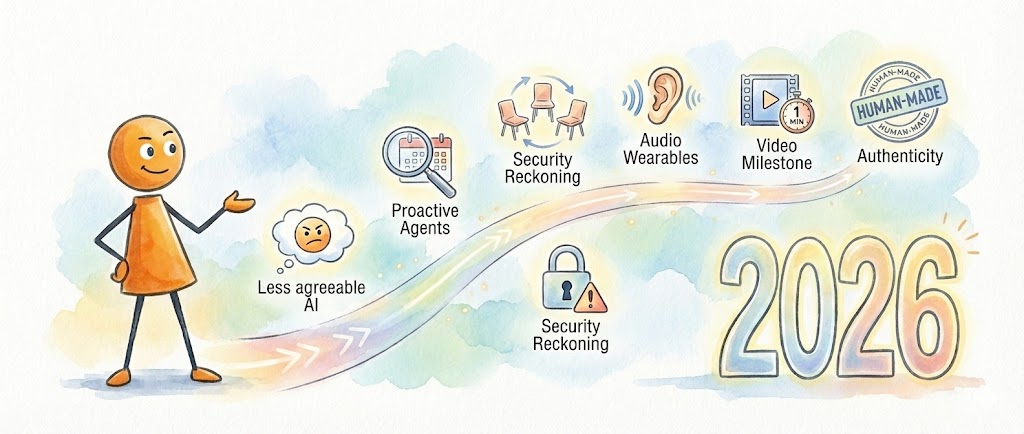
AI in 2026: Another fast moving transition year
What's next for AI in 2026? Dive into my predictions on agentic AI, the battle for audio wearables, the 1-minute video milestone, and the authenticity race.
Read more
2025: the year AI stopped being "a tool" and started becoming the operating system
AI in 2025 went from novelty to infrastructure. Sora reignited adoption, MCP connected data and tools, Gemini surged, and agents made work repeatable.
Read more